
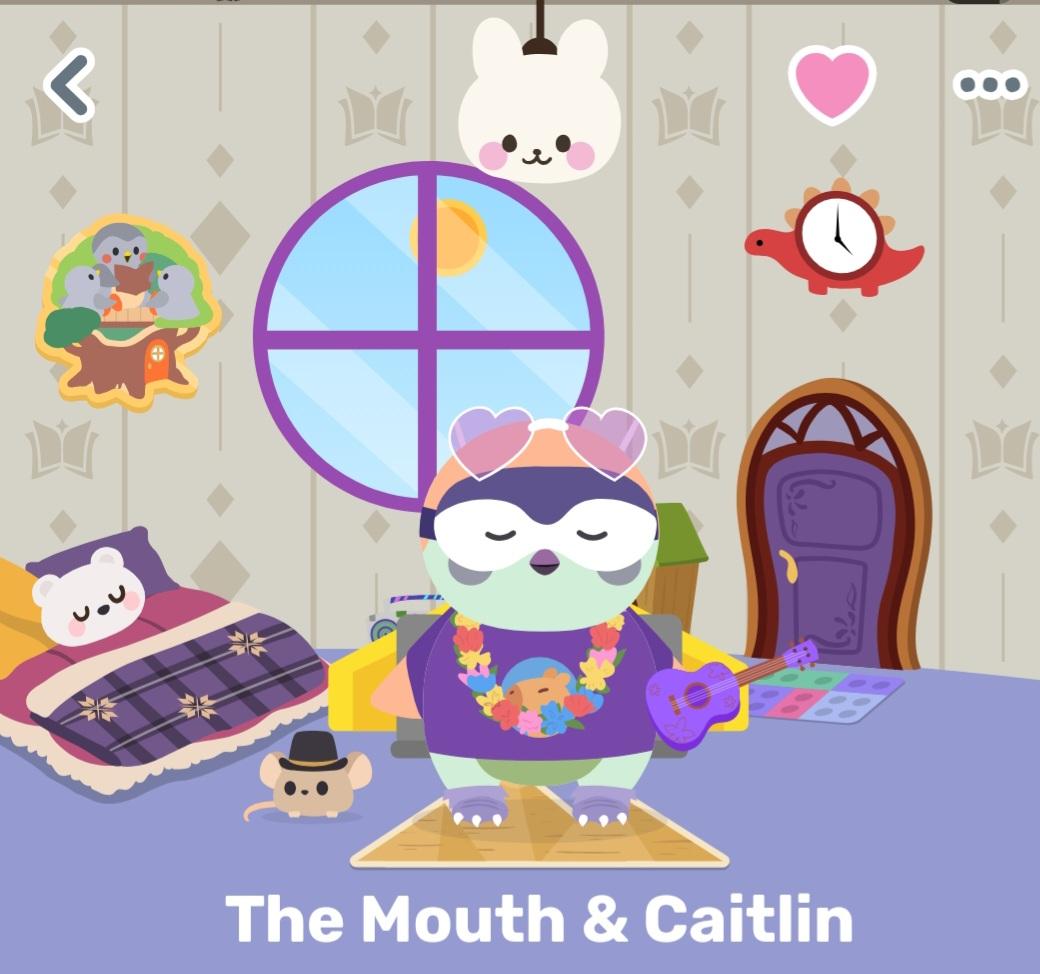
So, Martha already did her blog post about Finch, and now it’s my turn.
Listen, I’m SO into this app. I do feel the thrill and zeal dimming, just slightly, after a couple of months of daily use, but only slightly.
I do think that part of the appeal is that I missed out on Tamagachis, NeoPets, The Sims, and lots of the pet-type, virtual-reality-ish things my peers did. Derek and I got our revenge by being really into furbies. We even learned Furbish, made up our own spinoff language, and, thanks to Derek’s ability to Internet-sleuth, figured out how to make them talk and sing together, even though we never had access to the actual directions. But somehow, the furbies never scratched the “I want a little electro-pet” itch. And actually, I’m not sure Finch is quite doing that, either.
The thing is, I don’t entirely understand why, precisely, this app is working so well for me … which, in itself, kind of fascinates me. As it stands right now, Finch and VoiceOver play fairly nicely together, but I don’t get descriptions of my “birb” or anyone else’s, unless I take screenshots and run them through Be My AI, and who has time or motivation to do all that? There isn’t even an easy way for me to remind myself of what my birb is wearing, much less change and coordinate her outfits. (Martha will often laugh and tell me, “Uh, honey, your birb has no pants on right now, just so you know.)
Because, thankfully, the app isn’t punitive at all, the way others are, I don’t feel obligated to check in every day. Your birb will not be harmed if you flake out. I do enjoy the whimsical, childlike “choose your own adventure” stories you can engage with every day, as well as the surprise prizes you get from the “quests” and the Question Of the Day.
My main fun right now is saving enough rainbow stones to buy clothing and furniture, in part for me, but more so to gift the Finch friends I know in real-life. While it would be hugely helpful to receive immediate descriptions of their birbs and houses, so I could get a read on their preferred colors and aesthetics, it’s still a delightful challenge for me to choose things based solely on their real-life personality, interests, etc. This is less doable, of course, with the Finch friends I’ve found through Facebook’s Finch groups … or, as Martha and our friend Amy jointly dubbed it, “the Dark Finchie Forest.” The community has been SO kind and generous, although a lot of the interaction is pretty visual and image-centered. One opportunity which I pounced on was offered by a person who gave 50 random gifts to the first few commenters. Another person constantly does gifting posts where she’ll send you five gifts, anything you want. These people aren’t always asking for trades … in fact, rarely so, since they are extremely hardcore, already have most or all of the items, and know hacks that enable them to donate the items to others without losing the items themselves. I’ve been trying to figure out what these “gifting fairies” get out of all this labor, some of which includes detailed spreadsheets, Google Forms, contests, and gifting to hundreds of people, multiple times. So far, I haven’t discovered why they do it, other than that it brings them joy and seems to be a hobby for them.
I’m not nearly that intense about it, but it brightens up my Finch day to receive some random gifts every once in a while. Other folks online are quick to hop on as random gifters, accountability buddies, or just birb friends if you want more people in your trees to share vibes. People are also often quick to throw you a few extra plushies, which are equivalent to a ton of rainbow stones. So you can either sell these plushies as a means of buying more things, or send them along to other Finch users, especially early ones, to help them build their inventory and get started.
While I’m not doing a HUGE deep-dive into the “dark dealings,” as Martha calls the Finch folks online, I continue to be touched, and also slightly baffled, by people’s endless kindness and capacity to just … give stuff on Finch for no apparent reason. I’m trying to pay it forward as best I can. Because I have no interest in collecting sets, coordinating outfits and birdhouse decor, etc., I’m not very good at trading back or helping people find things they’re looking for. But I’m really getting a kick out of Finching with people I know IRL and treating them to little spurts of Finch joy when I find things they might like.
As for my personal goals, I’m kind of amazed by my newfound dedication. It helps that I’m currently on leave from work (that’s another blog-post for another day), so I have extraneous energy and time to work at achieving my goals. I was always that nerdy kid who wanted every prize or treat or reward, even if it wasn’t something I even cared about. (I asked doc Martha what this says about me as a person and she didn’t have much to say, so feel free to throw out theories re: what this behavior says about my personality.)
Besides reminding me to have a water bottle on hand, Finch also acts as a nice, clean daily checklist, reminding me about little things I intend to do: eating applesauce “to ward off rickets,” as we say; eating my baby-food prunes and taking extra Metamucil to help with digestion; doing odious daily chores, like cleaning out my thermos, checking on whether or not the dishes are done at any given time of day, and monitoring laundry, trash, and recycling; and, most notably, flossing and wearing my retainer. Seriously, I have struggled with consistent (okay, any) flossing and retainer-wearage my entire life, and this app singlehandedly cured me. I’m totally going to tell my dentist. I mean, I know it won’t work for nearly everyone, but it’s so fun! And so simple! And free, unless you want to pay for Plus (which I did, in a fit of pique, while under the influence of a sedative, because I got mad that I couldn’t send the summer Ice Cream vibe or buy a pair of koala slippers).
Finch has also really, really helped me build in movement throughout the day. Again, it’s a clean, easy-to-access list of goals … so, as I flick through it a couple times a day, I’m reminded about body-focused reminders: deep breaths, stretch breaks, “functional fitness,” going outside, walking after a meal, jumping jacks, and, my favorite, “jumping,” which has always been my vestibular “blindism / stim” of choice and continues to bring my joy, even in my thirties, when I encourage myself to do it despite my internalized ableism.
All this to say … this app continues to be such a delightful life hack for me, even as the world catches on fire in innumerable ways. I highly recommend it if you, like me, have a bit of a prize-craving, gift giving and receiving, surprising-people personality.
You can find me, Caitlin, and my birb, The Mouth, at Finch code:
AMFSCALS4M
Happy Finching, if you’re into it … cheep!
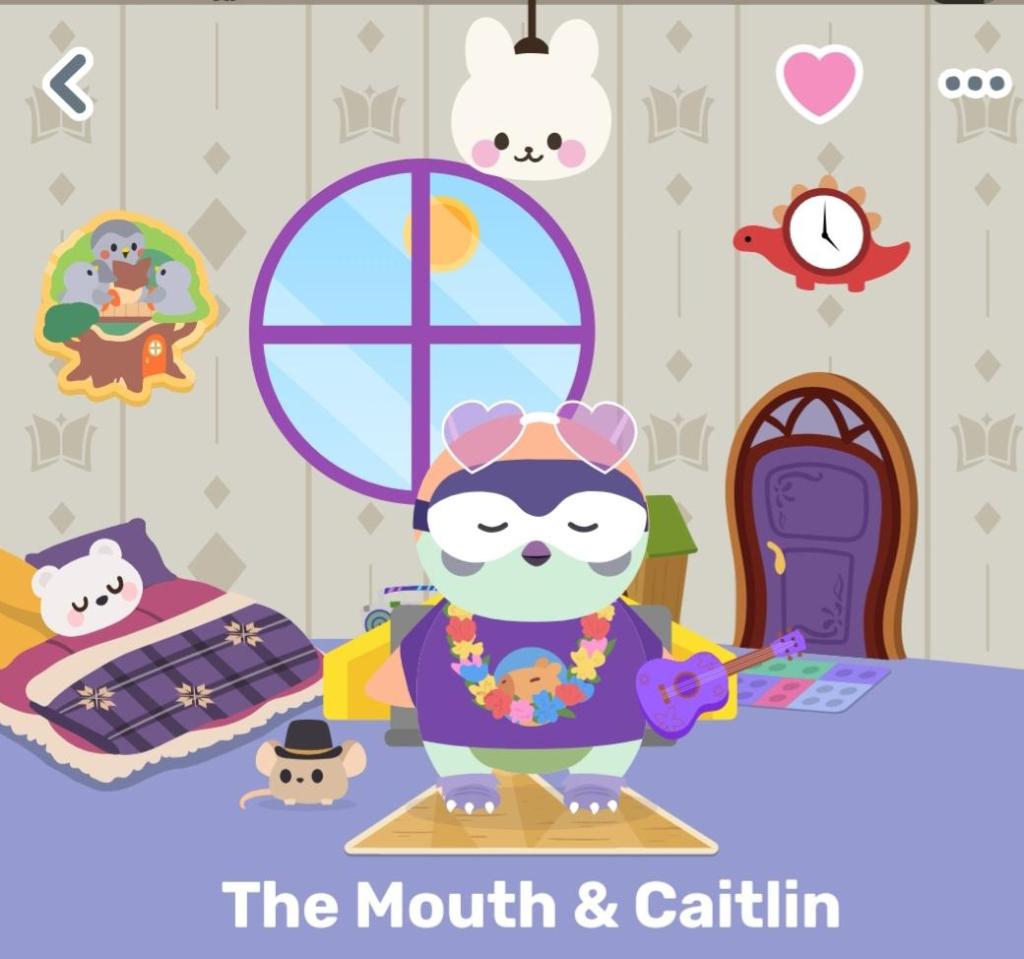
Screen shot of The Mouth & Caitlin (Caitlin’s Birb and pet in her Birbhouse). The birb, The Mouth, stands in the center of the room wearing a purple shirt, purple bear (?) slippers complete with claws, a multicolored lei, some kind of maybe sunglasses on her head with heart-shaped frames. She’s holding a ukelele, also purple. No pants. Next to her is her mouse, BB, wearing a fedora. In the house behind her there is a mostly purple bed (with a yellow pillow and white bear head pillow), a wall decoration showing that she completed some event, purple framed window, white bunny ceiling light, red dino clock over the purple enchanted door. Her doormat has multicolor lego shapes. The rug under her feet is…dark yellow? Behind her there’s maybe a boom box on the floor (no dresser which usually goes there) and something with a green top. It’s not visible because The Mouth is in front of it.

